Exercises for Programmers: A Book Review
How a programming exercise book with no official answers helps beginners learn independent problem-solving and gives experienced developers a practical path to learning new languages.
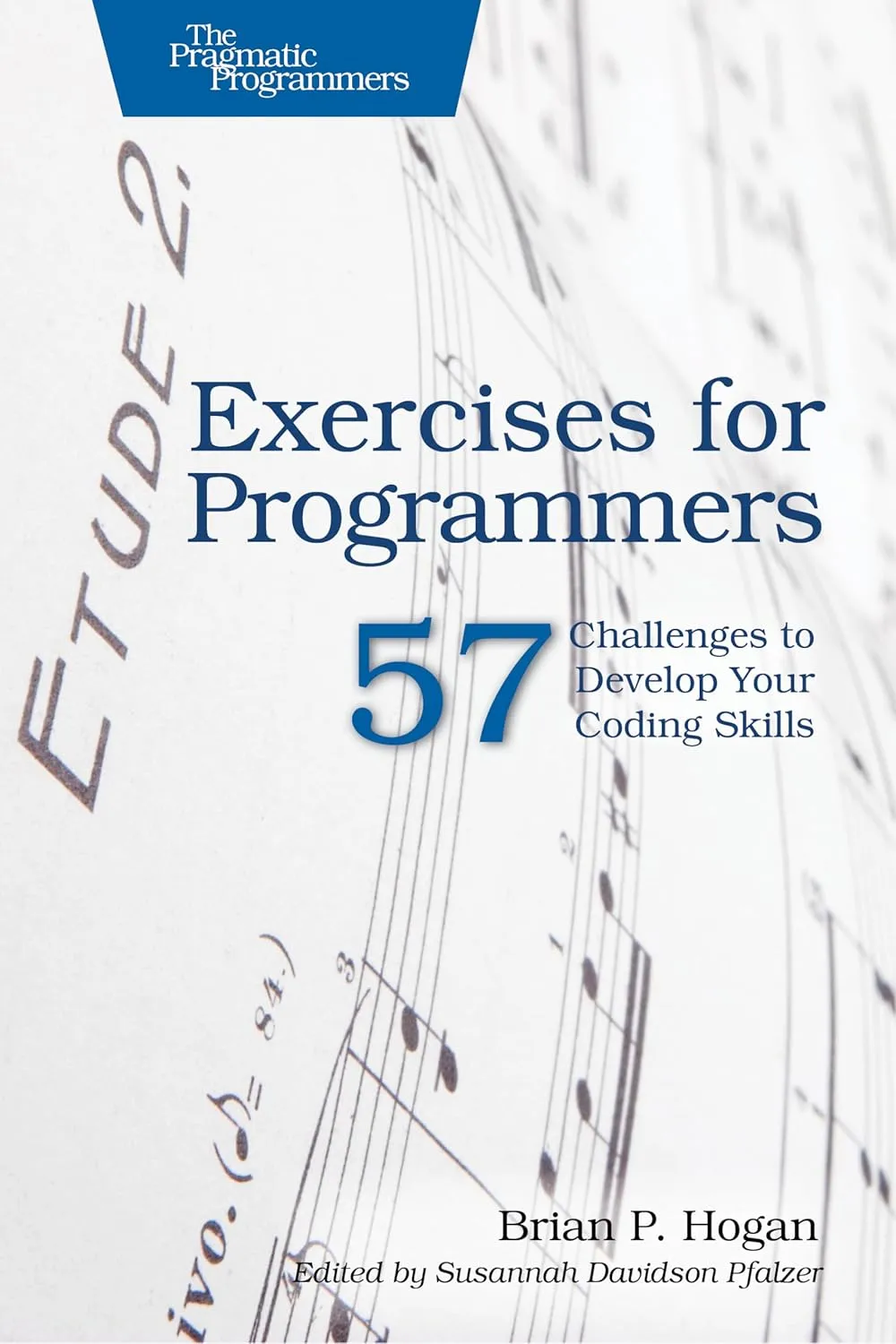
When I first heard that Exercises for Programmers: 57 Challenges to Develop Your Coding Skills by Brian P. Hogan had no official answers, I thought that sounded strange. Aren't answers the whole point of an exercise book?
After working through it, I realized that this is exactly what makes it so good.
What Makes This Book Different
Most exercise books guide you toward one "correct" implementation. This one does not.
You get a challenge, a clear goal, and constraints. Then the rest is up to you.
That design forces you to make decisions for yourself:
- How should I structure this?
- What trade-offs matter here?
- Is this solution simple enough?
- Did I actually solve the problem?
The key idea is simple: if your program works and meets the challenge requirements, your path to get there can be different from someone else's, and that is completely fine.
No Answers Is the Feature
At first, not having answers can feel uncomfortable. But that discomfort is where growth happens.
Programming in real projects is rarely about reproducing a predefined solution. It is about navigating ambiguity, making choices, and validating outcomes. This book trains that exact muscle.
You still know whether you succeeded, because you can test if your program works. What matters is not whether your code looks identical to an "official" answer, but whether your thinking is sound and your solution does the job.
Why It Is Great for Beginners
A common problem after finishing a bootcamp is not just "How do I code?" but "What should I build now?"
This book solves that problem by giving structured, practical problems without over-guiding you. It helps beginners move from tutorial-following to independent problem-solving.
Instead of memorizing patterns, you learn how to think:
- Break a problem into smaller parts
- Choose a reasonable first approach
- Evaluate and improve your solution
- Build confidence through repetition
That is exactly the bridge many new developers need.
Why Experienced Developers Should Read It Too
This is not just a beginner book.
For senior or experienced developers, it is one of the best ways to learn a new language properly. You can start with the basic challenges and steadily work toward larger, more complete programs.
Because the exercises progress in scope, you naturally practice:
- Core syntax and data types
- Input/output and control flow
- Data modeling and structure
- Error handling and edge cases
- Building more complete software from simple components
It gives you a practical, repeatable path from "I know the basics" to "I can ship something real."
Final Thoughts
Exercises for Programmers is a book that trusts the reader. It gives you meaningful challenges and asks you to think for yourself.
That is why it works so well.
If you are a beginner, it helps you build the problem-solving mindset that tutorials often miss. If you are experienced, it gives you a clean, disciplined way to learn a new language from first principles all the way to fully fledged software.
And its biggest lesson is this: solving the problem matters more than matching someone else's exact implementation.