Zero To Production In Rust: A Book Review
Why Luca Palmieri's Zero To Production In Rust is the benchmark for how a backend book should be written: test-driven development, real-world practices, and production concerns from chapter one.
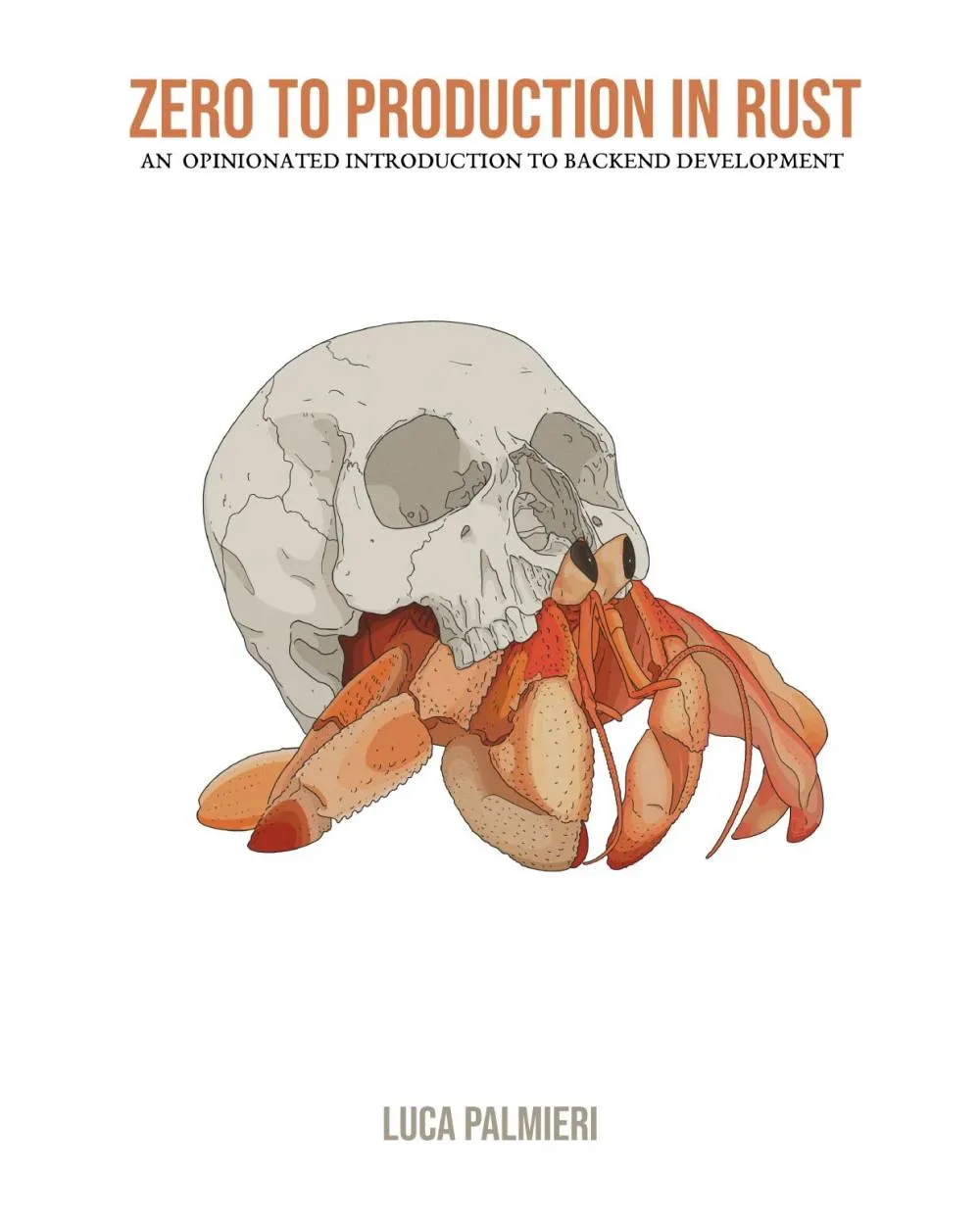
Most programming books that promise to take you from zero to production end up stopping somewhere around "hello world deployed to a free tier." They simplify the hard parts, skip the operational concerns, and leave you with a demo that would never survive a real team or a real incident at 2 a.m. Zero To Production In Rust by Luca Palmieri is not one of those books. I loved it, and it feels like exactly how a "zero to production" book should be done: best practices from the get-go, test-driven development throughout, and the kind of real practices that other tutorial books usually water down or leave out entirely.
What Makes It Special
The premise is straightforward: you build a fully functional email newsletter API from scratch, chapter by chapter, until it is genuinely production-ready. That is not marketing language. Palmieri walks you through the full arc of backend development (project structure, database persistence, observability, error handling, authentication, deployment, and more) while treating each step as something a professional team would actually ship.
What sets this book apart is the discipline of the approach. You do not bolt on tests at the end or treat CI as an afterthought. Test-driven development is woven into the fabric of the project from the start. You write integration tests before you implement features. You set up a continuous integration pipeline before you even have a web server running. That is the kind of sequencing that tutorial books almost never attempt, because it is harder to teach and slower to follow. Palmieri commits to it anyway, and the result is a codebase (and a reader) that understands why things are built that way, not just what was built.
Real Practices, Not Tutorial Shortcuts
Too many backend books give you a happy path and call it a day. This one does not. When you add a database, you deal with test isolation and side effects. When you need to mock external services, you reach for proper tooling like wiremock rather than hand-waving. When errors happen, and they will, you build a deliberate error handling strategy instead of sprinkling unwrap() and hoping for the best.
The book also spends serious time on topics that "hands-on" guides often mention in passing:
- Observability: structured logging, instrumentation, and understanding what your application is doing in production.
- Database migrations: evolving your schema safely as requirements change.
- Deployment: Docker, platform choices, and the day-two concerns that follow a first deploy.
- Security: authentication and authorization flows that reflect how APIs are actually protected.
These are not digressions. They are the point. Palmieri draws on his experience running Rust services in production at scale, and it shows. The book teaches you to think like someone who will be on call for the thing they built.
Test-Driven Development Done Right
If you have read other books that mention TDD in the introduction and then abandon it by chapter three, you will appreciate how consistently this one sticks to the practice. New functionality starts with a test that describes the behaviour you want. Implementation follows. Refactoring comes when the tests give you confidence to change things.
That rhythm has a cost. The book is long, and some sections involve backtracking and restructuring as the design matures, but it is the right cost. You learn how professional Rust backend development actually feels: iterative, test-backed, and willing to revisit earlier decisions when the domain demands it. There is even a chapter dedicated to refactoring the test suite itself as the application grows, which is a level of honesty most tutorials never reach.
Who Should Read This Book
I think Zero To Production In Rust is an excellent fit for:
- Rust developers moving into backend work who want a structured path from language basics to a deployable API.
- Backend developers from other languages who want to see how Rust handles the same problems (errors, async, type-driven design) without toy examples.
- Anyone tired of tutorial books that skip production concerns and want to learn observability, CI/CD, and operational thinking alongside the code.
- Teams adopting Rust who need a shared reference for how to structure, test, and ship a service properly.
You should have some Rust fundamentals before starting. This is not a first Rust book. But you do not need prior backend experience. The concepts and rationale are explained thoroughly, and the GitHub repository with all the supporting code (including tests) is there when you want to compare your work against the canonical version.
Final Thoughts
What I loved most about this book is that it respects both the reader and the craft. It does not pretend production is easy, and it does not cut corners to make the narrative smoother. It shows you how the pros do it: TDD from day one, real tooling choices with clear reasoning, and a steady accumulation of practices that turn a side project into something you would trust in production.
If you are serious about Rust backend development, or even backend development in general, and you want a book that actually earns the "zero to production" title, this is the one. It is long, deliberate, and demanding in the best way. That is exactly what a book like this should be.