Lean from the Trenches: A Book Review
Reflections on Henrik Kniberg's real-world Kanban case study, why Part 2's practical guidance shines, and how it compares to more accessible Agile classics like The Agile Samurai.
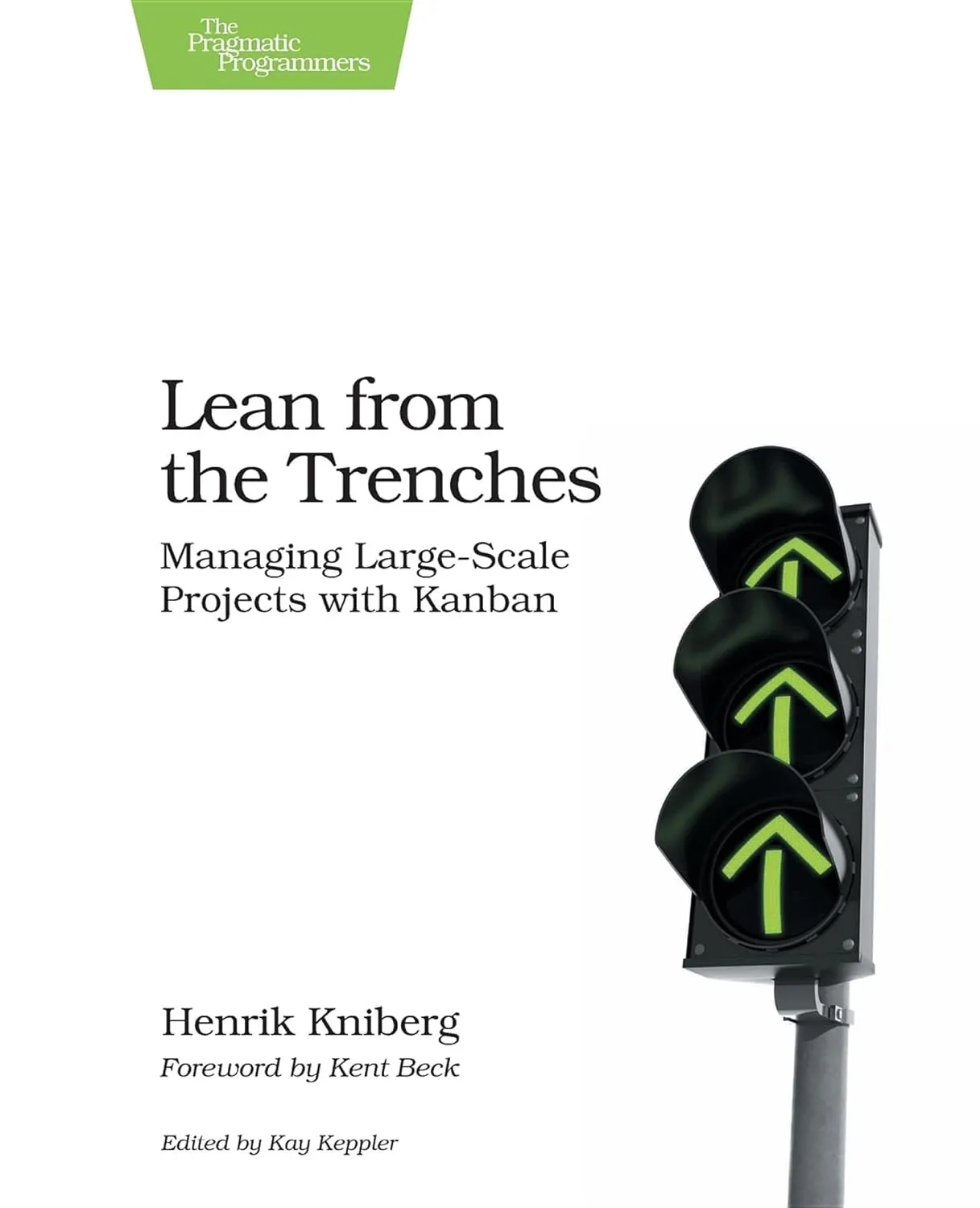
When people talk about Agile, most of the examples are abstract: story cards, sticky notes, and hand‑wavy promises about "flow" and "continuous improvement." Lean from the Trenches by Henrik Kniberg is different in that it anchors everything in a very real, very specific project. You’re not reading theory; you’re looking over the shoulder of a team trying to deliver a large‑scale project using Kanban, with all the constraints, compromises, and messy realities that come with it.
For me, the book lands in an interesting place. It’s full of useful ideas, especially if you’re wrestling with large backlogs, complex dependencies, and a lot of stakeholders. But it’s also not the easiest read from start to finish, and some of the same lessons are covered in other books (like The Agile Samurai) in a way that feels more engaging. Still, there’s a lot of value here if you’re willing to stick with it.
Part 1: A Real Project, Warts and All
Part 1 is the heart of the book: a guided tour through a real government project, told through the lens of a Kanban system. This is where the book is at its most distinctive. Kniberg doesn’t just say "use a Kanban board"; he walks through how the team designed theirs, how they visualised work, and how they iterated on it over time.
What I really appreciated was how deeply he dug into the parts of the board:
- Columns, states, and policies: How work flows from idea to done, and what each column actually means in practice.
- WIP limits: Where they help, where they hurt, and what happens when the team ignores them.
- Classes of service and priorities: How to handle emergencies, long‑running work, and everything in between without losing control of the system.
You get a sense of what does and doesn’t work on a real project, not a polished diagram drawn after the fact. There are compromises, bottlenecks, and trade‑offs on almost every page, which makes it feel honest and grounded.
At the same time, I found the delivery of Part 1 a bit dry. The level of detail is great if you’re deeply invested in Kanban mechanics, but it can also make the reading experience heavy. It felt like work to push through to the end of the section, even though the content itself was strong.
Ironically, one of the best parts of Part 1 is actually the summary at the end. Kniberg steps back and distils the whole case study into the key lessons: what they tried, what stuck, and what they’d do differently. If you found the earlier chapters dense, the summary gives you the value in a much more digestible form.
Part 2: Where It Really Shines
Part 2 is where the book really came alive for me. While Part 1 is about this specific project, Part 2 is about your project: it shifts from "here’s what we did" to "here’s how you can apply these ideas in your own context."
The advice here is much more practical and broadly applicable:
- Designing your own board instead of copying someone else’s
- Choosing sensible WIP limits based on your team, not abstract rules
- Handling large backlogs without turning them into graveyards of forgotten ideas
- Managing stakeholders and expectations when you move away from fixed scope and rigid plans
- Scaling Kanban across multiple teams and services without drowning in coordination overhead
This section reads more like a toolkit than a case study. If you’re in the middle of a large‑scale project and trying to keep flow, quality, and sanity under control, the patterns and suggestions in Part 2 are immediately usable. It’s also where Kniberg’s experience really shows, because he’s not pushing a pure textbook version of Kanban; he’s giving you practical options and trade‑offs.
How It Compares to The Agile Samurai
If you’ve read The Agile Samurai, you’ll recognise some familiar themes: focus on value, transparency, frequent delivery, and using feedback to guide the work. Both books are trying to help teams deliver better software in the real world, not in idealised conditions.
Where they differ is in tone and delivery:
- Lean from the Trenches is more like a detailed field report from a single project. It’s narrow but deep, especially around Kanban and large‑scale flow.
- The Agile Samurai feels more like a clear, upbeat guidebook. It covers a lot of the same underlying ideas with more energy and a more accessible structure.
For me, The Agile Samurai ultimately delivered similar points in a more engaging and approachable format. If you’re new to Agile or looking for a first book, I’d still recommend that one first. Lean from the Trenches makes more sense as a follow‑up: something to read when you’re ready to get more specific about Kanban and large‑scale delivery.
Who Should Read This Book
I think Lean from the Trenches is best suited for:
- Team leads and delivery managers running larger, multi‑stream projects who need to visualise and manage complex work.
- Agile coaches and Kanban enthusiasts who want a concrete, end‑to‑end example of a real system in production.
- Developers on large teams who are curious about why their board looks the way it does and what might happen if they changed it.
If you’re just getting started with Agile in general, this probably isn’t the first book I’d hand you. But if you’re already familiar with Scrum or Kanban basics and you’re wrestling with scaling them to bigger projects, there’s a lot here that will resonate.
Final Thoughts
Overall, Lean from the Trenches is a good, honest look at what it takes to run a large‑scale project with Kanban. Part 1 gives you a rare, unvarnished case study with all the details of a real board and a real team, and Part 2 turns that experience into practical guidance you can actually apply.
The trade‑off is that the book can feel dense and a bit dry at times, especially early on. If you push through, or even just lean on the Part 1 summary and focus on Part 2, you’ll come away with a much clearer sense of how to make Kanban work beyond the whiteboard. And while I still think The Agile Samurai covers many of the same ideas in a more engaging format, Lean from the Trenches earns its place as a valuable, experience‑driven companion for anyone dealing with real‑world, large‑scale Agile delivery.